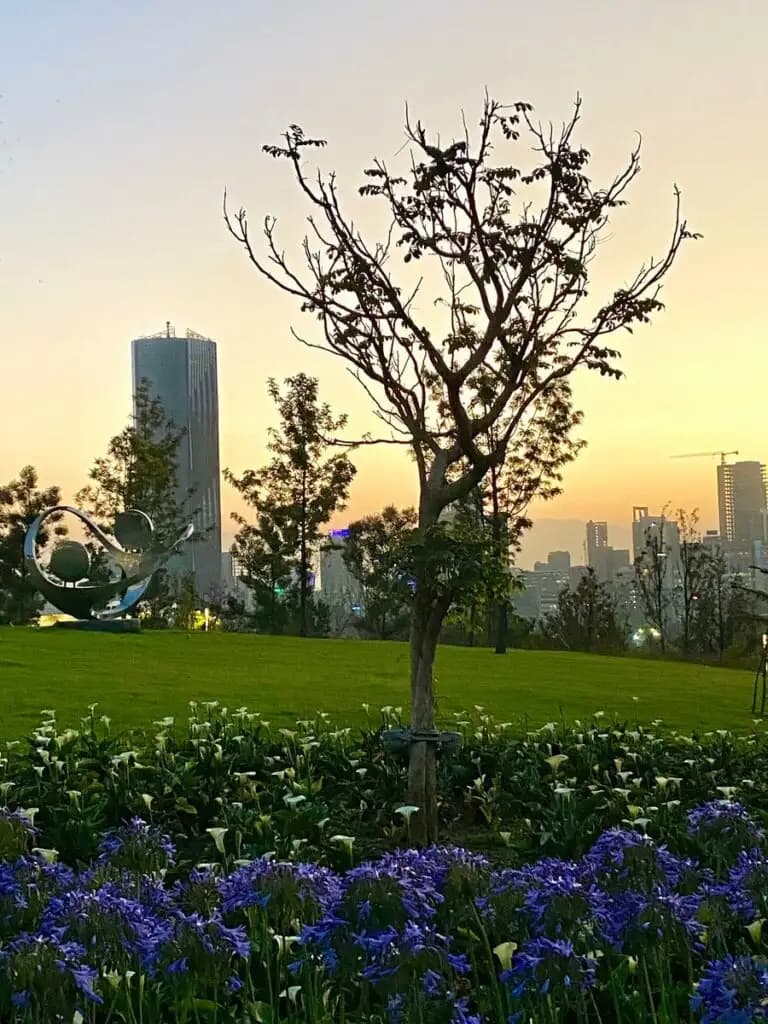
Addis Abeba, አዲስ አበባ, meaning “New Flower,” is Ethiopia’s capital and one of Africa’s highest major cities, located in the central highlands at over 2,300 meters above sea level. Its elevation gives the city a mild highland climate, with average temperatures typically ranging between 10°C and 25°C and a main rainy season from June to September.
This highland environment supports Afromontane vegetation and is well suited for indigenous tree species such as Juniperus procera, ጥድ, Cordia africana, ዋንዛ, and Ficus vasta, ዋርካ, which are adapted to the city’s altitude, rainfall patterns, and soil conditions. These species are part of Addis Abeba’s ecological heritage and contribute to shade, soil protection, biodiversity, and urban resilience.
The city’s green identity is strongly linked to Entoto, one of Addis Abeba’s most important ecological and cultural landscapes. The Entoto hills are widely known for eucalyptus forests, but they also reflect a deeper story of indigenous highland vegetation, watershed protection, soil conservation, and the need to restore native biodiversity.
As a rapidly expanding urban center with over 5 million residents, Addis Abeba includes dense neighborhoods, institutional compounds, roadsides, parks, river corridors, religious compounds, schools, and peri-urban areas. These spaces create important opportunities for planting, protecting, and managing trees across the city.
Addis Abeba is also home to key green spaces and environmental landmarks, including Gullele Botanical Garden, Entoto Park, Unity Park, Friendship Park, public gardens, roadside trees, and community green areas. Gullele Botanical Garden is especially important for plant conservation, research, environmental education, and the protection of indigenous and threatened plant species.
As the seat of the African Union and the United Nations Economic Commission for Africa, Addis Abeba also plays an international role in conversations on sustainable development, climate action, urban resilience, biodiversity, and Africa’s green future.
Protecting Addis Abeba’s trees and green areas is essential for cleaner air, cooler neighborhoods, healthier communities, improved stormwater management, stronger biodiversity, and a more resilient capital city.